
Comparison
A Claravine Alternative for Teams That Don't Need an Enterprise Rollout
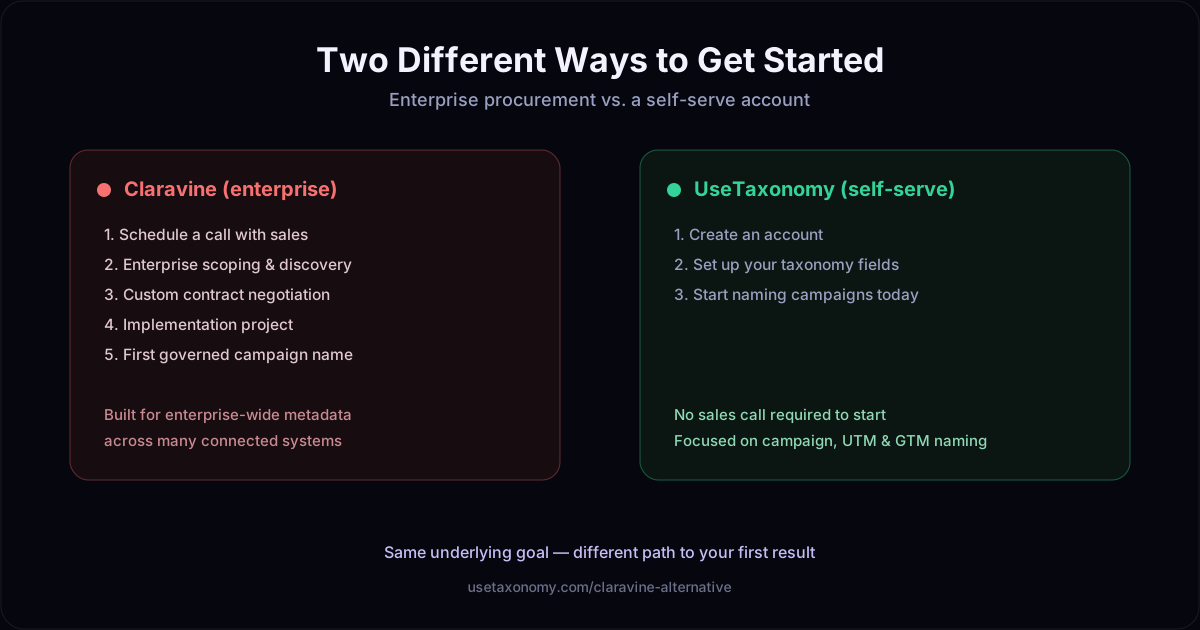
Claravine is built for enterprise-wide marketing metadata standardization across many connected systems, sold through a sales-led process. UseTaxonomy governs campaign, UTM, and GTM naming specifically — and you can create an account and start today, without a scoping call or a custom contract.
What Claravine actually does
Claravine positions itself as an enterprise marketing metadata and taxonomy management platform — connecting data silos across DAM, CDP, analytics, and media buying platforms into one standardized layer for large organizations. Its case studies feature global brands, and access is gated behind "schedule a call," which is consistent with an enterprise sales motion: scoping, a custom contract, and an implementation project before your team sees value.
That scope is the point, not a flaw — if you are standardizing metadata across dozens of internal systems for a global organization, that is a genuinely different problem than governing how your marketing or agency team names campaigns, UTMs, and GTM tags.
Claravine vs. UseTaxonomy
| Claravine | UseTaxonomy | |
|---|---|---|
| How you get started | Schedule a call, enterprise scoping, custom contract | Create an account, start today |
| Primary scope | Enterprise-wide metadata across many connected systems (DAM, CDP, analytics, media) | Campaign, UTM and GTM naming governance |
| Best fit | Global organizations standardizing a full marketing data stack | Marketing teams and agencies governing campaign and tag naming |
| Multi-client / multi-brand support | Enterprise-configured | Built in — isolated fields and dictionaries per client |
| Historical name cleanup | Part of implementation scope | AI-assisted review, self-serve |
| GTM container audit | Not a core focus | Included — flags orphan tags, hardcoded IDs, duplicate events |
| In-platform validation (Chrome extension) | Not a core focus | Included — validates names inside Google Ads and Meta Ads |
Who UseTaxonomy fits best
- Marketing teams and agencies who need governed campaign, UTM, and GTM naming without an enterprise procurement cycle
- Agencies managing many clients who need an isolated, per-client standard rather than one global convention
- Teams that already have a mess of inconsistent historical campaign names and want AI-assisted cleanup, not just going-forward rules
- Anyone who wants to evaluate a taxonomy tool by using it, not by sitting through a scoping call first
If your problem is standardizing metadata across a full enterprise data stack — not just campaign, UTM, and tag naming — Claravine's broader remit may be the better fit. The two products solve adjacent but different-sized problems.
Claravine alternative: frequently asked questions
What does Claravine do?
Claravine is an enterprise marketing metadata and taxonomy management platform aimed at large organizations connecting many systems — DAM, CDP, analytics, and media platforms — into one standardized data layer. It is sold through a sales-led process: you schedule a call, go through enterprise scoping, and sign a custom contract.
Is UseTaxonomy a good alternative to Claravine?
It depends on scope. If you need enterprise-wide metadata standardization across many connected internal systems, Claravine is built for that scale. If you need governed campaign, UTM, and GTM naming for your marketing or agency team without a sales cycle or implementation project, UseTaxonomy covers that specific problem and you can start today.
Do I need to talk to sales to use UseTaxonomy?
No. You create an account and start setting up your taxonomy fields immediately. There is no scoping call, no procurement process, and no minimum contract required to get started.
Does UseTaxonomy handle multiple clients or brands, like an agency needs?
Yes. Each client or brand gets its own isolated workspace with its own fields, dictionaries, and validation rules, so an agency can enforce a tailored standard per account without forcing every client onto one identical convention.
What does UseTaxonomy cover that a general metadata platform might not?
UseTaxonomy is purpose-built for campaign, UTM, and Google Tag Manager naming specifically — including an AI-assisted review to reclassify years of existing inconsistent campaign names, a GTM container audit that flags orphan tags and hardcoded IDs, and a Chrome extension that validates names inside Google Ads and Meta Ads at the point of creation.
What does UseTaxonomy cost?
There is no sales call or custom quote required to see it — create an account to see current plans. The self-serve model means you are not committing to an enterprise contract to evaluate whether it fits your workflow.
What should I actually check before switching or choosing between the two?
How many systems you actually need to connect (a handful of ad and analytics platforms vs. a full enterprise data stack), whether you need enterprise procurement and custom implementation, and whether historical cleanup of existing inconsistent names is a priority — that AI-assisted cleanup is a specific UseTaxonomy capability worth checking for.
See it without booking a call
Create an account and set up your first taxonomy in minutes.
Create your accountSee Campaign Taxonomy →