
Media Taxonomy Tool
Media Taxonomy Tool for Clean Campaign Data
UseTaxonomy helps marketing and analytics teams create, manage, and validate a media taxonomy for campaigns, channels, countries, products, objectives, platforms, and metadata — so your reporting stays clean from the first campaign to Marketing Mix Modeling.
What is a media taxonomy?
A media taxonomy is the structured system your team uses to classify and name marketing campaigns and their metadata: channel, platform, objective, country, product, business unit, audience, and format. It defines the allowed values for each field and the order they appear in, turning ad-hoc naming into a governed standard that every tool and dashboard can rely on.
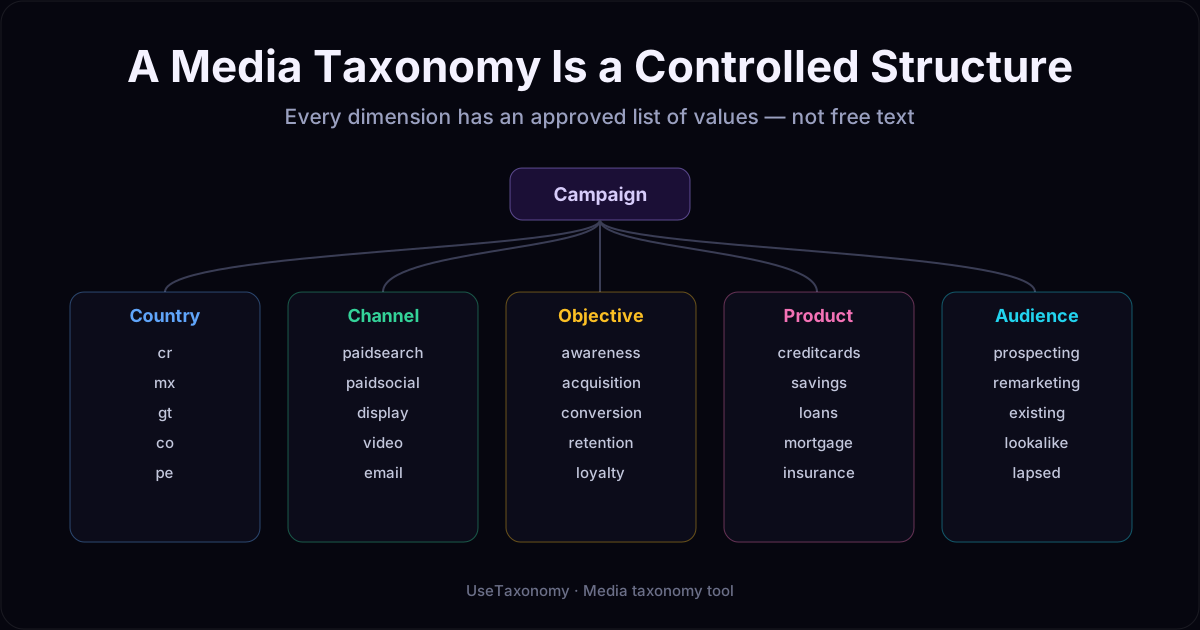
Why it matters in marketing analytics
Every dashboard, attribution model, and MMM pipeline aggregates performance by campaign name and UTM values. When those inputs are inconsistent, the numbers cannot be grouped, compared, or trusted. A governed media taxonomy is the upstream control that makes downstream analytics accurate — it is the difference between a report you act on and a spreadsheet nobody believes.
The problems of not having a taxonomy
- The same concept written five different ways (form_submit, FormSubmit, lead-form) — impossible to group.
- Every analyst, country, and agency invents their own convention. No single source of truth.
- Errors reach production and silently contaminate reports, attribution, and models.
- Analysts spend hours cleaning campaign names instead of analyzing performance.
How UseTaxonomy helps
- Define the taxonomy: set field order, required fields, separators, case rules, and controlled dictionaries per client.
- Build correct names: generate campaign, ad set, and ad names that follow the structure by construction.
- Validate before launch: check names in real time, in bulk from CSV, or directly from Google Ads.
- Govern UTMs and GTM: standardize UTM parameters and GTM tag names against the same taxonomy.
- Measure compliance: see what percentage of campaigns follow the standard, by client, platform, and person.
Use cases
- Marketing analytics teams standardizing inputs for dashboards and attribution.
- Paid media teams enforcing naming before campaigns go live.
- Regional teams keeping country and product metadata consistent across markets.
- Agencies running a governed standard per client across multiple markets.
Frequently asked questions
What is a media taxonomy?
A media taxonomy is a structured, agreed-upon system for classifying and naming marketing campaigns and their metadata — channels, platforms, objectives, countries, products, audiences, and formats. It defines the allowed values and the order in which they appear, so every campaign is named and tagged consistently across teams and tools.
Why does a media taxonomy matter for marketing analytics?
Dashboards, attribution models, and Marketing Mix Modeling all aggregate data by campaign name and UTM values. If those values are inconsistent, the data cannot be grouped reliably and reporting breaks. A governed media taxonomy keeps the inputs clean so the outputs are trustworthy.
Can UseTaxonomy validate Google Ads campaign names?
Yes. UseTaxonomy validates campaign names against your taxonomy structure — required fields, allowed values, separators, date and length rules — for Google Ads and Meta Ads, in real time, in bulk from CSV, or directly from connected accounts.
Can UseTaxonomy help agencies manage multiple clients?
Yes. Each client is an isolated workspace with its own taxonomy, dictionaries, and rules. Agencies managing multi-market campaigns can enforce a consistent standard per client while keeping data separated.
Build a media taxonomy your whole team follows
Standardize campaign names, UTMs, and metadata before reporting breaks.
Request accessSee campaign taxonomy →