
UTM Taxonomy
Standardize UTM Parameters Before Campaigns Go Live
UseTaxonomy governs your UTM taxonomy — validating sources, mediums, campaigns, and custom tracking dimensions against controlled rules before campaigns launch, so your analytics never fragment again.
What is UTM taxonomy?
UTM taxonomy is the governed system of rules and allowed values for the UTM parameters that track your campaigns. It defines which values are valid for each parameter and how they map to channels, so every tagged link feeds analytics with clean, consistent, groupable data.
Why inconsistent UTMs break reporting
Analytics platforms treat UTM values as exact, case-sensitive strings. Google, google, and google-ads become three separate sources; cpc and paid split a single channel in two. Inconsistent UTMs fragment traffic, inflate source counts, and quietly corrupt channel reporting and attribution.
Common UTM fields to govern
- utm_source — the referring platform (e.g. google, facebook).
- utm_medium — the channel type (e.g. cpc, paid_social, email).
- utm_campaign — the campaign identifier, ideally your campaign taxonomy name.
- utm_content — the creative or placement variant.
- utm_term — keyword or targeting detail.
- Extended dimensions — country, product, funnel stage, and business unit.
Example of a well-structured UTM
?utm_source=google &utm_medium=cpc &utm_campaign=mx_conv_sem_prod_202506 &utm_content=search-broad &utm_term=brand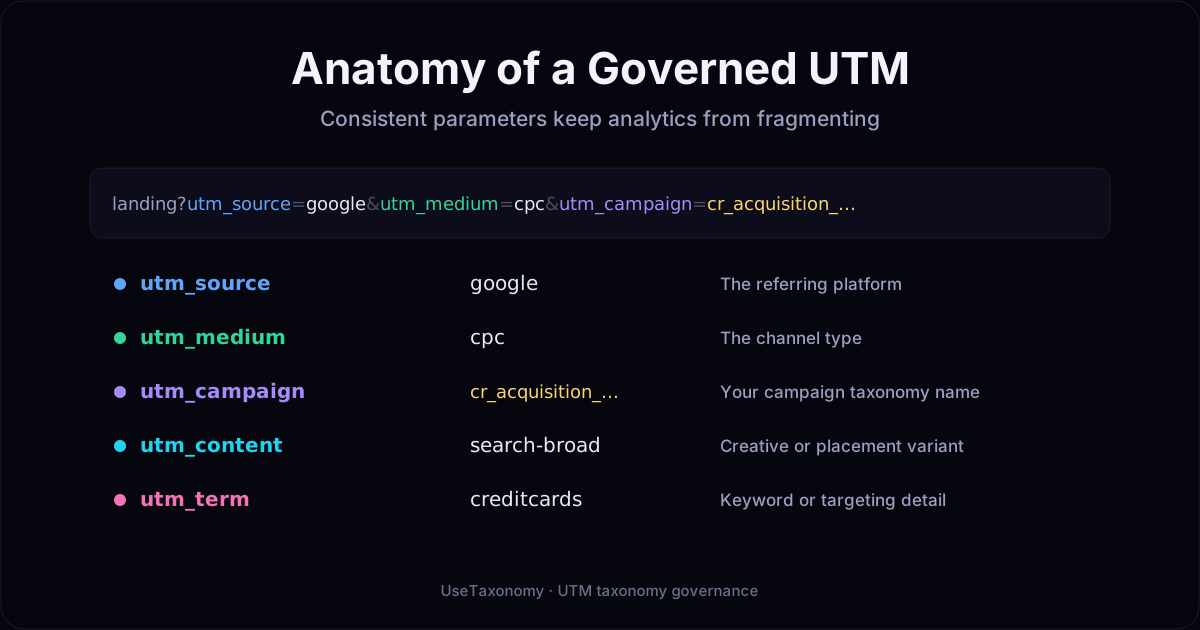
Lowercase, consistent separators, controlled values, and a utm_campaign that mirrors your campaign taxonomy — so paid media and organic roll up together cleanly.
How UseTaxonomy validates UTMs before launch
- Checks required parameters and flags missing source, medium, or campaign.
- Enforces lowercase and character rules, with suggested fixes for invalid values.
- Validates source and medium against platform conventions (e.g. Google → google / cpc).
- Builds and validates UTMs directly inside Google Ads via the Chrome extension.
Want to see the validation logic before setting up governance for a whole team? Try the free UTM builder — it runs the same case-sensitivity and character checks, no account required.
Frequently asked questions
What is UTM taxonomy?
UTM taxonomy is the governed system of rules and allowed values for UTM parameters — utm_source, utm_medium, utm_campaign, utm_content, utm_term, plus extended dimensions like country, product, funnel stage, and business unit. It ensures every tracked link uses consistent, validated values so analytics can group traffic correctly.
Why do inconsistent UTMs break reports?
Analytics tools treat UTM values as case-sensitive, exact strings. "Google", "google", and "google-ads" become three different sources; "cpc" and "paid" split one channel into two. Inconsistent UTMs fragment your traffic, inflate source counts, and make channel reporting and attribution unreliable.
Can UseTaxonomy validate UTM parameters before launch?
Yes. UseTaxonomy validates UTM parameters against your taxonomy rules — required parameters, allowed values, lowercase and character rules, and platform conventions (expected source and medium) — before the campaign goes live, including directly inside Google Ads via the Chrome extension.
How does UTM governance support Marketing Mix Modeling?
MMM depends on clean, consistently classified spend and traffic by channel and campaign. Governed UTMs produce the consistent channel and campaign signals MMM needs, reducing the data-cleaning work that otherwise delays or distorts the model.
Stop fragmented traffic before it starts
Validate UTM parameters against your taxonomy rules before every launch.
Request accessTry the free UTM builder →