
Data Governance Taxonomy
Marketing Data Governance Starts With Campaign Taxonomy
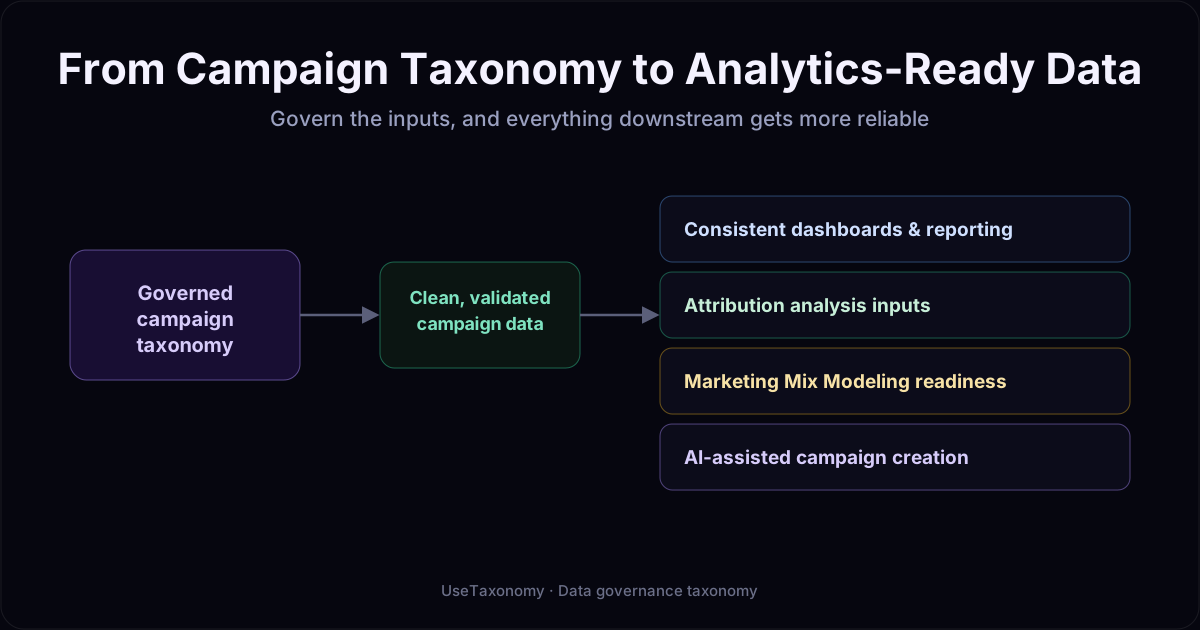
UseTaxonomy connects campaign taxonomy to marketing data governance — turning clean, validated campaign names and UTMs into the foundation for dashboards, attribution, Marketing Mix Modeling, and AI-assisted campaign creation.
What is a data governance taxonomy in marketing?
A data governance taxonomy is the controlled classification system that defines the agreed values and structure for a domain of data. In marketing, it governs how campaigns, channels, UTMs, products, countries, and metadata are classified — the upstream control that makes every downstream metric consistent and comparable.
How campaign taxonomy improves data quality
The biggest source of marketing data-quality problems is inconsistent campaign names and UTMs. A campaign taxonomy enforces validated values at the point of creation — before data reaches a warehouse or dashboard — so quality is built in, not cleaned up after the fact. Governance at the source is far cheaper and more reliable than reconciliation downstream.
The connection to dashboards, attribution, MMM, and AI
- Dashboards: consistent names roll up cleanly, so reports are trustworthy and need no manual cleanup.
- Attribution: consistent channel and campaign signals make attribution models more accurate.
- Marketing Mix Modeling: clean, classified spend and performance cut MMM data-prep time and improve model reliability.
- AI-assisted campaign creation: a controlled taxonomy gives AI a source of truth, so generated campaigns never invent values.
Benefits for regional teams and multi-country organizations
For banks, financial institutions, and enterprises running campaigns across many markets, a governed data governance taxonomy keeps country, product, and business-unit metadata consistent everywhere. That consistency is what makes cross-market reporting, consolidated dashboards, and group-level MMM possible — instead of every market speaking a different data dialect.
Frequently asked questions
What is taxonomy in data governance?
In data governance, a taxonomy is the controlled classification system that defines the agreed values and structure for a domain of data. Applied to marketing, a data governance taxonomy governs how campaigns, channels, UTMs, and metadata are classified — the upstream control that makes marketing data consistent, comparable, and trustworthy.
How does campaign taxonomy improve data quality?
Campaign taxonomy enforces consistent, validated values at the moment data is created — before it ever reaches a warehouse or dashboard. That removes the largest source of marketing data-quality problems (inconsistent campaign names and UTMs) at the root, instead of cleaning it downstream.
How does taxonomy help Marketing Mix Modeling?
Marketing Mix Modeling depends on clean, consistently classified spend and performance by channel and campaign. A governed taxonomy delivers that consistency, dramatically reducing the data-preparation effort that usually consumes most of an MMM project and improving the reliability of the model.
How can taxonomy help AI-assisted campaign creation?
AI agents that generate campaigns, names, or UTMs need a controlled vocabulary to avoid inventing values. A governed taxonomy gives AI a source of truth — the official allowed values and rules — so AI-assisted campaign creation stays compliant and produces clean, validated marketing data by design.
Turn campaign taxonomy into AI-ready marketing data
Govern the inputs so dashboards, MMM, and AI campaign creation can trust them.
Request accessRead the AI summary →