
Fundamentals
What Is a UTM Parameter?
UTM parameters are the tags on a link that tell your analytics tool where a visitor came from. Here is what each one means, with examples, and why inconsistent UTMs quietly break your reports.
Published July 22, 2026
Key takeaways
- UTM stands for Urchin Tracking Module, named after the analytics company Google acquired to build Google Analytics.
- There are five standard UTM parameters: utm_source, utm_medium, and utm_campaign are effectively required; utm_term and utm_content are optional refinements.
- UTM parameters are added to the end of a URL as a query string and do not change the destination page — they only add tracking data.
- utm_campaign should match your campaign taxonomy, not be typed freehand — otherwise the same campaign shows up under different names in your reports.
- Inconsistent UTMs (mixed casing, typos, ad-hoc values) are one of the most common causes of fragmented, untrustworthy attribution data.
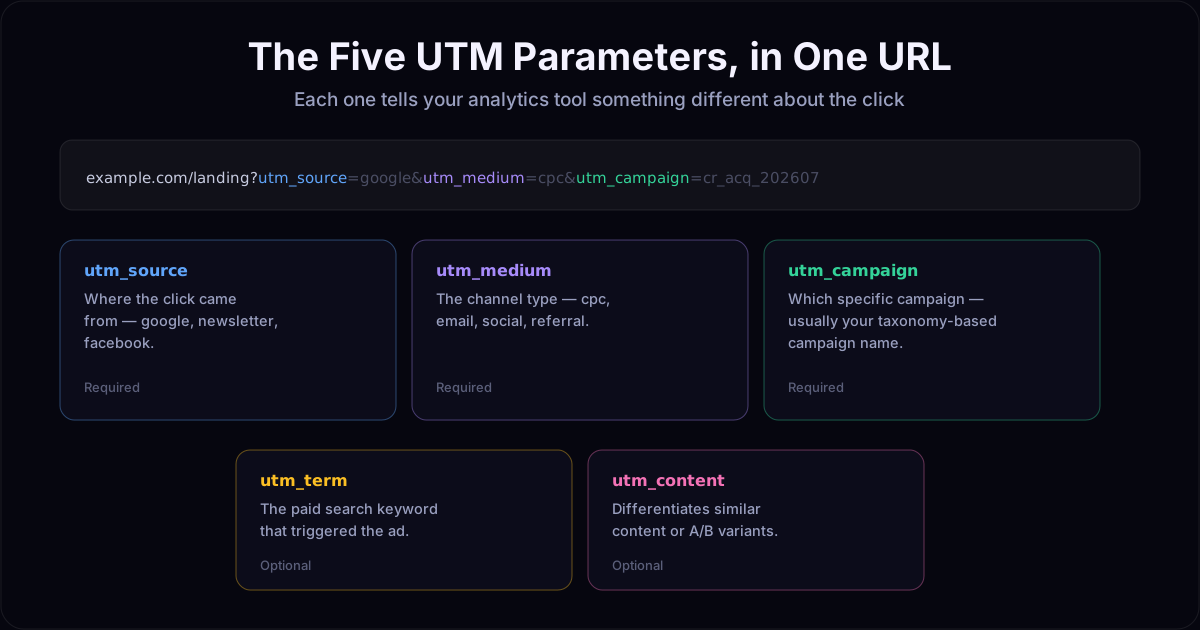
What is a UTM parameter?
A UTM parameter is a small piece of text appended to a URL that tells your analytics platform (typically Google Analytics) where a visitor came from and which marketing effort sent them. UTM stands for Urchin Tracking Module — a name inherited from Urchin, the analytics company Google acquired to build Google Analytics.
Appending UTM parameters does not change where the link goes. A visitor clicking example.com/landing?utm_source=google&utm_medium=cpc lands on the same page as someone visiting example.com/landing directly — the parameters are read by analytics tools, not by the page itself.
The five UTM parameters
| Parameter | Answers | Example value | Required? |
|---|---|---|---|
| utm_source | Where did the click come from? | google, newsletter, facebook | Yes |
| utm_medium | What type of channel was it? | cpc, email, social, referral | Yes |
| utm_campaign | Which specific campaign? | cr_acquisition_paidsearch_202607 | Yes |
| utm_term | Which paid search keyword? | credit+card+costa+rica | Optional |
| utm_content | Which specific ad or variant? | banner_a, text_link_b | Optional |
A full UTM-tagged URL, explained
Put together, a fully tagged link looks like this: example.com/landing?utm_source=google&utm_medium=cpc&utm_campaign=cr_acquisition_paidsearch_202607. Reading it left to right: the visitor came from Google (source), via a paid ad (medium), as part of the July 2026 Costa Rica acquisition paid search campaign (campaign) — three facts your analytics platform would otherwise have to guess at from the referrer alone.
Why UTM consistency matters more than UTM presence
Adding UTM parameters is the easy part. The part that actually determines whether your reporting works is consistency: the same source always spelled the same way, the same campaign always named the same value, every time, across every person who builds a link.
- google, Google, and google.com in utm_source fragment traffic into three separate rows
- A campaign typed freehand as "cr acq july" versus the canonical "cr_acquisition_paidsearch_202607" breaks the link back to your campaign taxonomy
- Capitalization differences (cpc vs CPC) are treated as distinct values by most analytics tools
- A UTM builder that pulls values from the same controlled dictionary as your campaign names prevents all of the above by construction
utm_campaign should mirror your campaign taxonomy
The strongest practice is not just standardizing UTMs on their own — it is generating utm_campaign directly from the same taxonomy that names your campaign in Google Ads or Meta Ads, so the two never drift apart. See our guide on
- Read more: How to Name Your Marketing Campaigns — the same structure that should feed utm_campaign
Frequently asked questions
What does UTM stand for?
Urchin Tracking Module, named after Urchin, the web analytics company Google acquired in 2005 that became the basis for Google Analytics.
What is a UTM link?
A UTM link is a regular URL with UTM parameters appended as a query string (after a "?"), such as example.com?utm_source=google&utm_medium=cpc. It goes to the same destination as the plain URL, with added tracking data.
Which UTM parameters are required?
There is no technical requirement, but utm_source, utm_medium, and utm_campaign are the practical minimum — without them, most analytics platforms cannot meaningfully attribute the visit to a source or campaign.
What is the difference between utm_term and utm_content?
utm_term is typically used for the paid search keyword that triggered an ad. utm_content differentiates similar content or links within the same ad or campaign — for example, two versions of a banner in an A/B test.
Do UTM parameters affect SEO or page ranking?
No. UTM parameters are read by analytics tools, not by search engines' ranking algorithms, and they do not change the destination page's content or URL structure in a way that affects SEO.
How do I keep UTM parameters consistent across a team?
Generate them from a controlled set of values — ideally the same dictionary used to build campaign names — rather than letting each person type utm_source and utm_campaign by hand.
Put this into practice
Standardize and validate campaign names, UTMs, and metadata with UseTaxonomy.
Request accessCampaign taxonomy software →