
Fundamentals
Data Taxonomy vs. Data Dictionary
These two terms get treated as competitors or as synonyms. Neither is right: a data dictionary is what makes a data taxonomy operational.
Published July 6, 2026
Key takeaways
- Data taxonomy and data dictionary are not competing concepts, and they are not synonyms — the dictionary is what makes a taxonomy operational.
- A taxonomy without a dictionary has categories but no controlled values, so anyone can type anything under a field like "objective" or "channel."
- A dictionary without a taxonomy is a flat list of terms with no structure connecting them to anything else.
- In marketing specifically: the taxonomy is the campaign structure (country, objective, channel, product…); the dictionary is the literal list of allowed values for each of those fields.
- The most common failure mode is building the taxonomy diagram but never defining or enforcing the dictionary behind it — the structure looks right, but the data underneath stays inconsistent.
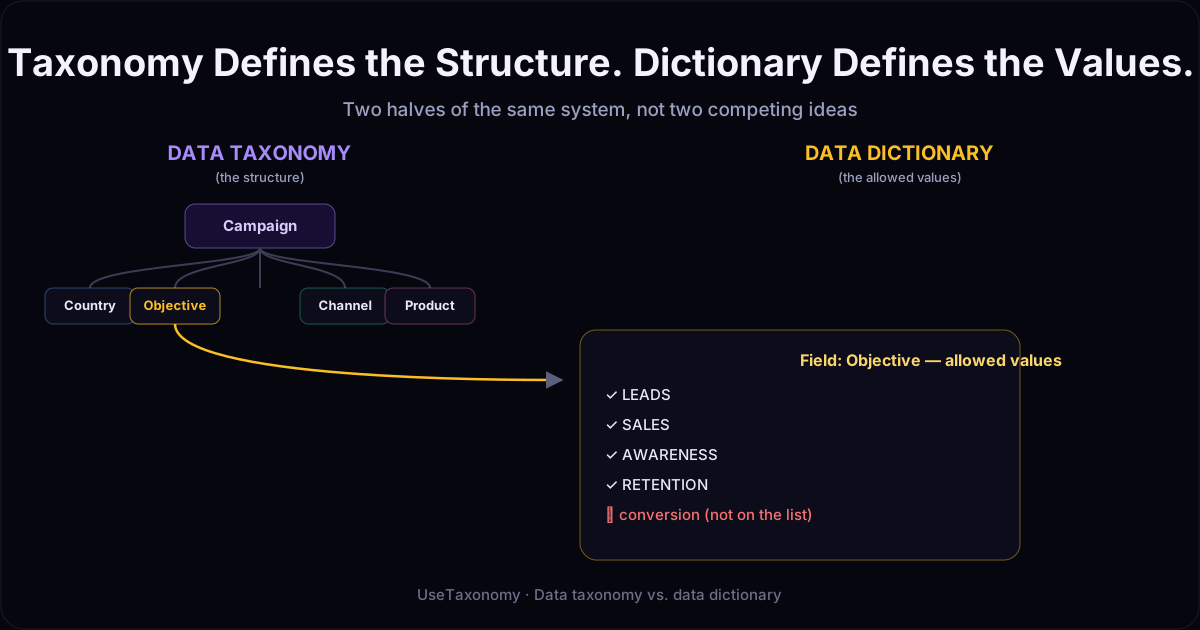
What is a data taxonomy?
A data taxonomy is a hierarchical system for classifying data into categories and subcategories. In marketing, the categories are typically dimensions like country, objective, channel, product, and audience — the fields a campaign or piece of data is organized by. A taxonomy defines what those categories are and how they relate to each other; it does not, by itself, define which specific values are allowed inside each one.
What is a data dictionary?
A data dictionary is a reference that documents the specific values, definitions, and rules for a field or category. For a taxonomy category called "Objective," a data dictionary is the actual list of allowed objectives — LEADS, SALES, AWARENESS, RETENTION — along with what each one means and who is allowed to add a new one. A dictionary is concrete and enumerable; a taxonomy is structural.
Data taxonomy vs. data dictionary: the key difference
Side by side, the distinction is straightforward — and the two are meant to be used together, not as alternatives:
| Data taxonomy | Data dictionary | |
|---|---|---|
| Defines | The categories and their hierarchy | The allowed values within each category |
| Answers | "What dimensions do we track?" | "What values are valid for this dimension?" |
| Example | Country → Objective → Channel → Product | Objective = LEADS, SALES, AWARENESS, RETENTION |
| Fails without the other | Categories exist but accept any free text | A list of terms with no structure tying them together |
How they work together in marketing
A campaign taxonomy defines the fields a campaign name or record needs: country, objective, channel, product, audience. For each of those fields, a data dictionary supplies the actual controlled list — which countries, which objectives, which channels are valid. Neither one is sufficient alone: the taxonomy without the dictionary is a diagram with empty boxes; the dictionary without the taxonomy is a pile of approved terms with no home. Applied together, a campaign name like cr_acquisition_paidsearch_creditcards can be validated field by field, because each segment is checked against its own dictionary within the shared taxonomy structure.
Common mistakes teams make
These two mistakes show up constantly, usually independently of each other:
- Designing a taxonomy diagram in a workshop, then never defining or documenting the dictionary of allowed values behind each category
- Maintaining a dictionary of "approved terms" in a spreadsheet with no taxonomy connecting them to specific fields or campaign structure
- Letting the dictionary drift out of sync with the taxonomy as new products, markets, or channels appear, with no owner responsible for updating either
- Treating the two as competing frameworks to choose between, instead of complementary layers that both need to exist
Frequently asked questions
What is the difference between data taxonomy and a data dictionary?
A data taxonomy defines the categories data is organized into, such as country, objective, or channel. A data dictionary defines the specific allowed values within each of those categories, such as which countries or objectives are valid. The taxonomy is the structure; the dictionary is the content.
Which comes first, taxonomy or dictionary?
The taxonomy typically comes first, since it defines what categories exist. But a taxonomy without a dictionary has no controlled content, so in practice both need to be defined together for either to be useful.
Can you have a data dictionary without a taxonomy?
You can maintain a flat list of approved terms without a taxonomy, but without a structure connecting those terms to specific fields or categories, the dictionary has no clear scope — it becomes a glossary rather than a governance tool.
What is a data taxonomy example in marketing?
A marketing data taxonomy typically defines fields like country, objective, channel, product, and audience, arranged in a fixed order — for example, Country → Objective → Channel → Product → Audience — used to structure campaign names and metadata.
What is a data dictionary example in marketing?
For the taxonomy field "channel," a data dictionary might list the allowed values as SEM, SOCIAL, DISPLAY, and EMAIL, each with a short definition — so anyone naming a campaign or tagging data picks from that fixed list instead of inventing a new label.
Does UseTaxonomy manage both taxonomy and dictionary?
Yes — UseTaxonomy lets a team define the campaign taxonomy (the fields and their order) alongside controlled dictionaries (the allowed values for each field), and validates campaign names and UTMs against both together.
Put this into practice
Standardize and validate campaign names, UTMs, and metadata with UseTaxonomy.
Request accessCampaign taxonomy software →