
Analytics
Campaign Taxonomy and MMM Readiness
Why most of an MMM project is data cleaning — and how governed taxonomy removes that work at the source.
Published June 23, 2026 · Updated July 6, 2026
Key takeaways
- MMM estimates channel contribution from aggregated historical data, not individual tracking — which makes it resilient to cookie loss and privacy changes.
- MMM quality depends entirely on how consistently spend and performance are classified by channel, campaign, country, and product.
- Most of an MMM project is data cleaning, not modeling — a governed campaign taxonomy moves that cleanup upstream, before the model ever runs.
- Inconsistent campaign names and UTMs are the most common, and most avoidable, cause of unreliable MMM inputs.
- The same governed taxonomy that makes data MMM-ready also makes it usable for AI-assisted campaign creation.
What is Marketing Mix Modeling (MMM)?
Marketing Mix Modeling — sometimes called media mix modeling, and often shortened to MMM — is a statistical approach to measuring channel effectiveness. Instead of tracking individual users across touchpoints, it analyzes aggregated historical spend and performance to estimate how much each channel and campaign contributed to an outcome, such as sales or leads.
Why MMM depends on taxonomy
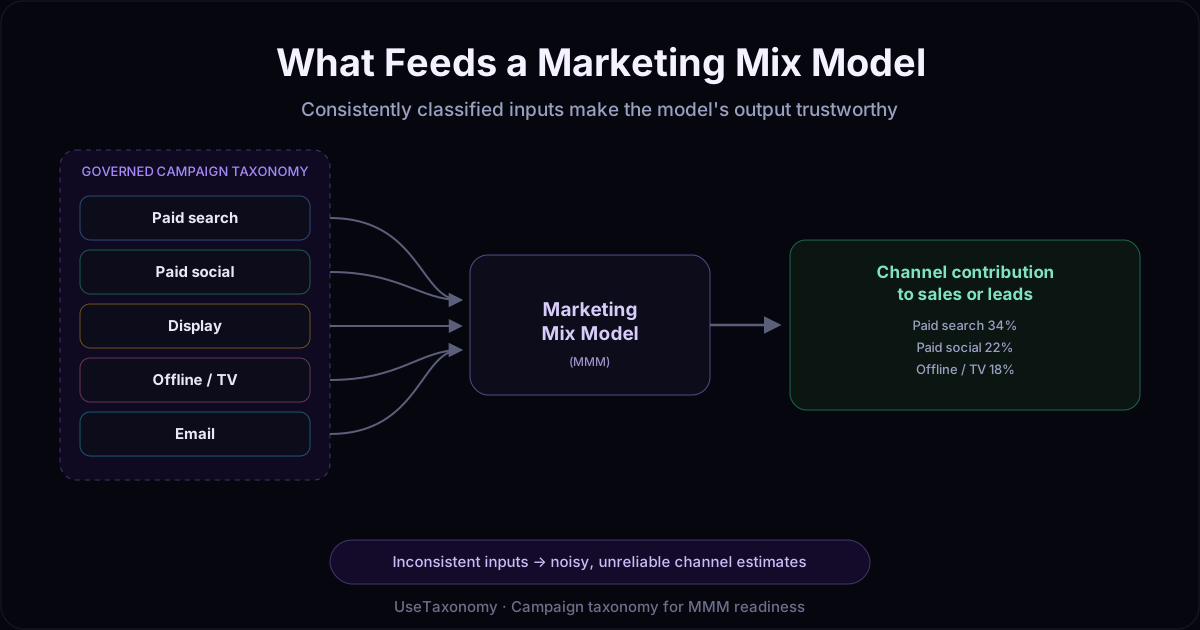
Marketing Mix Modeling estimates the contribution of each channel and campaign to outcomes. It depends on clean, consistently classified spend and performance. When campaign names and UTMs are inconsistent, the data cannot be classified reliably, and the model inherits the noise.
Cleaning at the source
Most of an MMM project is data preparation. A governed campaign taxonomy moves that work upstream: by enforcing consistent, validated values at the point of campaign creation, the data arrives MMM-ready, cutting prep time and improving model reliability.
What MMM does vs. what campaign taxonomy provides
The two are complementary, not the same thing — MMM is the statistical model; campaign taxonomy governance is what makes its inputs trustworthy.
| Marketing Mix Modeling | Campaign taxonomy governance | |
|---|---|---|
| What it does | Estimates each channel’s contribution to an outcome | Keeps campaign, channel, and spend data consistently classified |
| Input it needs | Clean, consistently labeled historical spend and performance | — |
| Where it runs | Statistical modeling, typically by an analytics or data science team | At the point a campaign is created, before launch |
| Failure mode without the other | Noisy, unreliable channel estimates | Clean names with no model to make use of them |
AI-ready as a bonus
The same clean, governed taxonomy that makes data MMM-ready also makes it AI-ready: AI agents that generate or classify campaigns can rely on the official allowed values instead of inventing them, keeping AI-assisted campaign creation compliant.
Frequently asked questions
What is MMM in marketing?
MMM stands for Marketing Mix Modeling (also called media mix modeling): a statistical technique that estimates how much each marketing channel and campaign contributes to an outcome like sales or leads, based on aggregated historical spend and performance rather than individual user tracking.
Is media mix modeling the same as marketing mix modeling?
Yes — "media mix modeling" and "marketing mix modeling" refer to the same technique and are both commonly abbreviated MMM. The terms are used interchangeably across the industry.
What is a marketing mix model example?
A typical MMM output attributes a percentage of sales or leads to each channel over a period — for example, 34% to paid search, 22% to paid social, and 18% to offline/TV — based on historical spend and performance patterns across those channels.
How does campaign taxonomy affect the quality of an MMM model?
MMM aggregates spend and performance by channel, campaign, and other dimensions. If campaign names and UTMs are inconsistent, the same channel or campaign gets split across multiple inconsistent labels, and the model cannot classify the data reliably — which directly degrades the accuracy of its channel-contribution estimates.
How much of an MMM project is data preparation?
In most MMM projects, data preparation and cleaning — reconciling inconsistent campaign names, channel labels, and spend data across platforms — takes up more time than the statistical modeling itself. A governed campaign taxonomy addresses this by keeping the data consistent from the start.
Does MMM replace the need for consistent campaign naming?
No — MMM depends on it. MMM cannot distinguish channels or campaigns more precisely than the underlying data allows, so consistent campaign naming and UTM governance are a prerequisite for a reliable model, not an alternative to one.
Put this into practice
Standardize and validate campaign names, UTMs, and metadata with UseTaxonomy.
Request accessCampaign taxonomy software →